Aloe Vera Gel Products Market is Expected to Thrive at Impressive CAGR by 2026 & Top Key Players are Forever Living Products, Evergreen, Aloecorp, Terry Lab, etc - Galus Australis
Aloe Vera Gel Products Market is Expected to Thrive at Impressive CAGR by 2026 & Top Key Players are Forever Living Products, Evergreen, Aloecorp, Terry Lab, etc - Galus Australis |
- Aloe Vera Gel Products Market is Expected to Thrive at Impressive CAGR by 2026 & Top Key Players are Forever Living Products, Evergreen, Aloecorp, Terry Lab, etc - Galus Australis
- Meghan Markle and Prince Harry's Santa Barbara Mansion Is Their 'Forever Home,' 'Finding Freedom' Author Says - Entertainment Tonight
- How Pokemon Started from a Popular Japanese Hobby - Comic Years
- How the Pandemic Has Changed Us Already - The Atlantic
| Posted: 14 Aug 2020 05:08 AM PDT This report also covers the impact of COVID-19 on the global market. The pandemic caused by Coronavirus (COVID-19) has affected every aspect of life globally, including the business sector. This has brought along several changes in market conditions. Aloe Vera Gel Products Market
To get SAMPLE of the report, please click: The Major Players Covered in this Report: Forever Living Products, Evergreen, Aloecorp, Terry Lab, Houssy, OKF, Aloe Farms, Houssy Global, ESI s.p.a., Grace Foods, Forever Living Products, Okyalo, Simplee Aloe, Aloe Drink For Life, Suja Life, Take Tory, Savia, Lily of the Desert, RITA, NOBE, Fruit of the Earth & More. Segment by Type, the Aloe Vera Gel Products market is segmented into Segment by Application, the Aloe Vera Gel Products market is segmented into The study also provides an overview of the Global Aloe Vera Gel Products Market, considering the key geographies and the segmentation. The report also studies the distribution channels and the latest technological advancements in the market. The report also studies the prevailing challenges that the industry is facing currently. This study is intended to provide the experts and professionals with a competitive benchmarking of the Global Aloe Vera Gel Products Market. The study provides the up-to-date information on the market share, key strategies of the leading players, profit margins, and capabilities. Some of the key geographies mentioned in this report include:
To get this report at a profitable rate @ Major factors covered in the report:
The analysis objectives of the report are:
View this report with a detailed description and TOC @ Any special requirements about this report, please let us know and we can provide custom report. Contact Us  |
| Posted: 13 Aug 2020 05:32 PM PDT   |
| How Pokemon Started from a Popular Japanese Hobby - Comic Years Posted: 15 Aug 2020 09:30 AM PDT There are a lot of fun stories about video games and their inception. For the most part, gamers don't think of games as organic processes of developing an idea and game mechanics. In our eyes, we simply play the game and live in that world that's presented to us. No series evokes more imagination and wonder than the Pokemon series. For young gamers who are now in their 30s, Pokemon games still bring up feelings of youth and excitement. If you know younger players who enjoy the series, then they sometimes don't even know much about the original games. No matter their ages, most players don't know how Pokemon started as an ode to a popular Japanese hobby. Anime fans might be able to guess the activity, but for the rest of us, the connection between this game series and the outdoors is closer than we think! The Popular Japanese Hobby that Inspired Pokemon Image Credit: The Pokemon Company Image Credit: The Pokemon Company In some anime series, Japanese kids will show a unique interest in a relatively unpopular practice here in the West. Bug catching is somewhat limited in the United States to fireflies or pillbugs. In Japan, however, children go hunting in forests for everything from beetles to cicadas. The practice, like many outdoor activities, lost a bit of popularity in the wake of the 1980s and the boom of video games. Rather than spend time outside, kids preferred playing games indoors. Satoshi Tajiri enjoyed bug-catching as a child and hated to see so many lose a love of the activity. This phenomenon in Japanese culture helped lead to a great idea that would change Tajiri's life forever: Pokemon. As urbanization and digital hobbies replaced time spent outdoors, Tajiri decided to come up with a game that replicated collecting insects. Thanks to some creativity, however, Tajiri didn't simply stop with bugs. He decided to work on a collection of monster-like animals that lived outside in a fictional world. Worried about kids finding the game interesting, he ensured players could form a connection with the creatures. This includes naming them and partnering up to take on tasks. As the game's development continued, fights seemed inevitable given their prevalence in Japanese role-playing games or JRPGs. Tajiri did not want to depict the creatures dying, however, due to his love for all living things. This is why you never see Pokemon die or bleed. Connecting People Through Video Games Image Credit: The Pokemon Company Image Credit: The Pokemon Company A huge element Tajiri wanted to feature was player interaction. Remember, the original Pokemon games didn't launch during a time with mainstream internet or wireless multiplayer. In order to work on players interacting, Tajiri would use the Game Boy's link cable to help figure how Pokemon started to shape up as a real experience. This device helped players plug their systems in together to do battles and trades. The experience brought people together; this feat was in line with Tajiri's hope to keep kids from staying inside away from each other. We now know how Pokemon started from such a beloved hobby, but where do we still see those inspirations today? Pokemon Go and a Full Circle Journey for How Pokemon StartedWhen you think about bug-collecting, the core of the activity is exploration. The goal of the Pokemon games on Game Boy and every console since is exploration. If you think about the different environments and places you visit, then you realize how important this concept is to the series. This concept is good in the console and handheld games, but it's fantastic in the most modern iteration of the game, Pokemon Go. The rich history of this worldwide mobile phenomenon is still taking place and writing itself. The game is as popular as ever, especially with people spending more time outside and in nature during COVID-19. Every update to the game emphasizes getting out to new places. While we can't necessarily meet new people as easily during a pandemic, the game still invites us to explore.  Image Credit: The Pokemon Company Image Credit: The Pokemon Company Tajiri's inspiration of how Pokemon started really feels like it has come full circle now. The idea of bug-catching isn't so funny when you consider millions of people hunting with their phones. Sure, nothing beats the real thing when it comes to interacting with nature. But, consider this: Pokemon Go gets people outside into their parks, neighborhoods, and cities. Most video games can't say the same. How Pokemon Started Something Bigger Than ItselfIt's easy as a gamer to think of video games as a product for consumption. We buy them, we use them, and we eventually stop using them in favor of new products. It's not unlike any hobby like reading or listening to music. The real difference between games and movies or TV, however, is the interaction we have with the story playing out in front of us. This process involves us making a connection with the game. Tajiri's early inception of the Pokemon games ensured we wouldn't just make a connection with a screen. Pokemon is about getting out and making connections with the real world too. Whether it's playing Pokemon Go in your community or going to a convention with other fans of the series, the game is a huge reason many build friendships with others around the world. I'd say that's true to the very principals that inspired the game in the first place. Featured Image Credit: The Pokemon Company Taylor loves to play video games in his spare time. He has two degrees in Political Communication and wrote his thesis on Marxism and the exploitation of college athletes. In his spare time, he loves spending time with his wife and two Toy Australian Sheppards. He's always got headphones in, and he's a diehard Cubs fan.  |
| How the Pandemic Has Changed Us Already - The Atlantic Posted: 15 Aug 2020 04:00 AM PDT 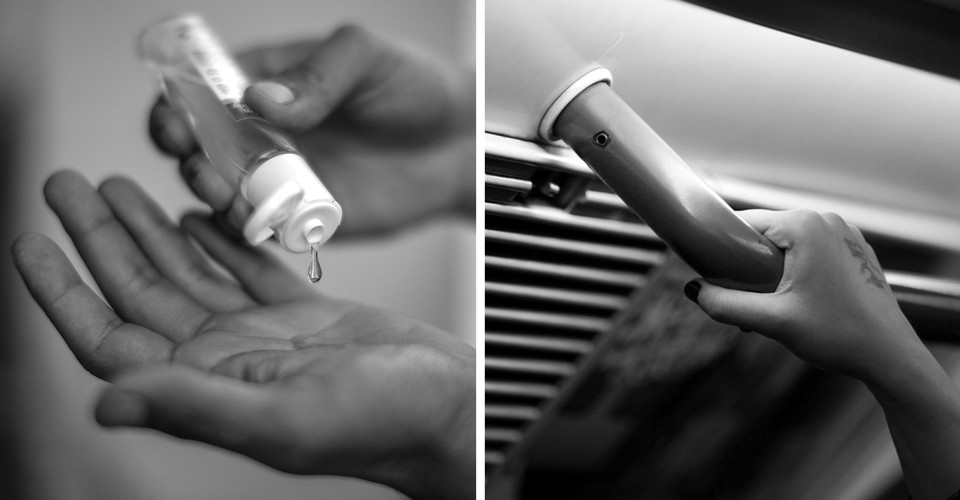 During the past five months, many prognosticators have prognosticated about how the coronavirus pandemic will transform politics, work, travel, education, and other domains. Less sweepingly, but just as powerfully, it will also transform the people who are living through it, rearranging the furniture of their inner life. When this is all over—and perhaps even long after that—how will we be different? For one thing, we'll better understand the importance of washing our hands. When I interviewed roughly 20 people from across the country about their pandemic-era habits, most of them planned to keep aspects of their new hygiene regimen long into the future, even after the threat of the coronavirus passes. "I will more regularly wash my hands throughout my life and I will never be anywhere without hand sanitizer and a mask," Leah Burbach, a 27-year-old high-school teacher in Omaha, Nebraska, told me. Read: The questions that will get me through the pandemic Those I interviewed said they imagine they'll continue to be conscientious about how viruses spread and what they can do to protect themselves and others. "I think I'll wear a mask if I've got a cold, now that I understand it's most effective in keeping me from spreading germs," said Josh Jackson, a 48-year-old in Decatur, Georgia, and the editor in chief of the culture magazine Paste. Others foresaw themselves avoiding many activities that are currently risky, possibly for the rest of their life. "I've heard wonderful things about Alaskan cruises and had always hoped to go on one someday. No more," said Jaclyn Reiswig, a 39-year-old homemaker in Aurora, Colorado. "Packing so many strangers together just gives me the germ creeps now." Also on the list of destinations that made people wary were gyms, indoor concerts, public pools, and restaurant buffets. Though people may feel as if their habits have been changed forever, these careful behaviors may not persist once they're less urgently necessary. Katy Milkman, a behavioral scientist at the University of Pennsylvania's Wharton School, told me that habits are more likely to stick if they are accompanied by "repeated rewards." If the threat of the virus is neutralized, she said, "the reward for scrubbing your hands won't endure, and I think the average person will go back to a simpler routine." The pandemic "looms large right now because it's our everything," Milkman said. "Certainly there will be some stickiness [in people's behaviors], and no one's ever going to forget going through this, but I think people are overestimating the degree to which their future actions will be shaped by the current circumstances." But even if our behaviors do fade, perhaps our mental landscapes will remain changed. Some people I reached out to said that the pandemic had infiltrated their dreams, possibly lastingly. "These days I have ordinary dream problems, only they happen in an environment where doing ordinary things will kill me," said Jane Brooks, who's 54 and works at a software company in Seattle. "I touch a dream hand railing and know the clock is now ticking on my death." She fears that these scenarios will populate her dreams even after the pandemic is over: Growing up during the Cold War in a small town in Alabama, she was haunted by nightmares that blended apocalypses both nuclear and Christian. The dreams started when she was about 5 and didn't recede until well into adulthood. Photos: The visual landscape of a world shaped by pandemic The pandemic may also alter the way we think about social interactions. Alyssa, a 17-year-old high-school senior in northern Indiana, said that it "was a rather extreme wake-up call to the fact … that the things you hold on to dearly can be taken away nearly instantly." She expects that this lesson will give her heightened FOMO—fear of missing out—and make her more likely to say yes to social invitations well into the future. (I've identified her by only her first name to protect her privacy.) The flip side of this renewed appetite for socializing is that more than one person told me that they expect to be less trusting of strangers. "I'm generally more fearful of people," Burbach said. "Men on the street have demanded that I take my mask off. People get too close to me." The seriousness with which someone treated the pandemic might become one more trait that Americans use to size up new acquaintances. Marge Smith, a 53-year-old clinical psychologist in New Orleans, said that while she's usually "willing to befriend people who are diametrically opposed in terms of their beliefs or attitudes," she won't want to spend time with people who were more preoccupied with, say, being able to dine out or go on vacation than with doing all they could to keep the virus from spreading. "It's likely to be a question going forward when I meet people," she told me. A clear historical precedent for a traumatic, drawn-out collective experience that scars the American populace is the Great Depression. The roughly decade-long crisis led many people, later in life, to fear discarding anything that might turn out to be useful. "That's definitely part of [what came out] of adapting to the hardships of the '30s and then moving into a period that's really quite well-to-do," said Glen H. Elder, Jr., a sociology professor at the University of North Carolina at Chapel Hill and the author of the book Children of the Great Depression, first published in 1974. One reason he thinks the Depression affected so many people permanently was simply its duration. For an extended period, it "called upon people to do a lot of things that they would not [otherwise] have been called upon to do." For instance, in some of the hundreds of families he studied, children were expected to cook family dinners, deliver packages, or mow the grass; this shaped how many went on to think about the appropriate amount of responsibilities to assign to their own children. But Elder said that the long-term effects of living through a global crisis are "idiosyncratic" and vary from person to person: "Everyone has their own experiences." Duration is perhaps the key to understanding why another global tragedy, the 1918–19 influenza pandemic, didn't seem to shape people's habits much in the long term. "The whole thing was very swift," John Barry, the author of The Great Influenza: The Story of the Deadliest Pandemic in History, told me. During the pandemic's second and third waves, when daily life was affected most, Americans typically endured no more than a few months of disruption. And unlike today, "the stress was not continuous," Barry noted—in many places there were "several months of relative normalcy in between" the two waves. (The first wave was far milder, and didn't interrupt daily rhythms.)  In 2020, five months—and counting—of deviating from our previously normal routines have given us an opportunity to reevaluate old habits. "Normally we go about our daily lives and … tend not to change our" behaviors, Milkman said. "We need some sort of triggering event that leads us to step back and think bigger-picture." Read: The pre-pandemic universe was the fiction This trigger can come in the form of a "temporal landmark"—Milkman has studied the importance of recurring ones, such as new years, new weeks, and birthdays, in prompting behavior adjustments—or a change, big or small, that interrupts well-trodden patterns. "We've got both things going on with the pandemic," she said. "There's a mental time boundary—everyone's like, 'Whoa, in March of 2020, I opened a new chapter'—and we have this constraint [of social distancing] that forces us to explore new things. So it's a double whammy." In this way, the pandemic has led to welcome discoveries for some. "After being locked indoors for months I realized my skin and hair look great without any products, expensive creams, serums, conditioners, or treatments," said Lizzette Arroyo, a 34-year-old in Ontario, California, who teaches community-college economics classes. She anticipates that, after the pandemic, she'll greatly reduce her previously $100-a-month skin-care budget, and buy less new clothing and wear less makeup as well. Naomi Thyden, a 31-year-old doctoral student in Minnesota, said that she's been happily wearing a bra less often during the pandemic, including out of the house. "The only reason a lot of people wear bras is because our breasts, as they exist naturally, are deemed inappropriate by society," she told me. "For some people bras provide needed support, but for a lot of us they serve no other purpose and are uncomfortable." And Caitlin Kunkel, a 36-year-old writer and humorist living in Brooklyn, has stopped carrying a big bag when she leaves the house, because she's no longer out and about for extended periods. She expects she'll be less likely to bring it with her even after the pandemic. "I've gotten used to not having shooting pain up my left shoulder," she said. "That big shoulder bag full of 12 hours' [worth] of stuff is a relic of 2019 and before." The constraints of the present moment have even helped some break established, unhealthy habits. Smith, the New Orleanian, has been smoking for most of the past 40 years, but she quit six weeks ago. "The pandemic was a time when I really couldn't go anywhere or do much of anything and I felt this was a good time to start, since any crabbiness wouldn't impact anyone else," she told me. Likewise, Zach Millard, a 28-year-old in Sioux Falls, South Dakota, used to have about 15 to 20 drinks a week, in part because it soothed his social anxiety. But when the pandemic kept him at home, he started drinking less and reflecting on his habit. "If COVID-19 never happened … I would have barreled right into alcoholism," he told me. He's now down to two or three drinks a week. Of course, the pandemic can just as easily promote unwelcome behaviors. "In general, the more out of control [peoples'] life circumstances, the more stressed they feel by what is going on around them, and the less social support people experience, the more vulnerable they are to using maladaptive coping," Bethany Brand, a clinical-psychology professor at Towson University, told me. That can manifest as excessive sleeping or drinking, among other things. Further, Brand said, the threats of the pandemic can fuel anxiety, including after they're gone. "I struggle with anxiety so it's basically hit me in the face during this," said Alex Tanguay, who's 30 and works in TV-news production in Tempe, Arizona. "Anything that comes into the apartment, I'm disinfecting." She told me she feels as if she might be paranoid, but at the same time she wants to keep her roommate and co-workers safe. (She's been going to work in person.)  One thing that's given Tanguay some comfort, though, is doing puzzles, and I heard of many stress-relieving activities that people had recently adopted, beyond the pandemic clichés of watching more Netflix and baking sourdough bread. People have been spending more time meditating, birding, gardening, cooking, and sewing. Alexander Aquino, a TV and film editor in Los Angeles, said the pandemic has led him to check in more regularly with friends and family, something he hopes to maintain well into the future. Zeeshan Butt, a health psychologist in Oak Park, Illinois, has started riding 50 to 75 miles a week on his bike. "Before the pandemic, I rode next to never," he said. The most unusual stress reliever I heard about was from Millard. Each morning, he puts on some soft music and works his way through the pile of dirty dishes and kitchenware deposited the previous night by him and his three roommates, scrubbing away in the early light. "The hot water washing over my hands and the steam hitting my face brings this unique sense of calmness to me as I'm still waking up for the day," he said. "It's similar to a hot shower." Although Millard thinks the dishwashing habit may taper off after the pandemic—he'd have to wake up early to do it and still get to work on time—many of these new routines, hobbies, and preferences may remain after the pandemic subsides. Milkman pointed me to a 2017 paper, titled "The Benefits of Forced Experimentation," that studied the commuting paths of Londoners before and after a public-transit strike that shut down some Tube stations for two days. The service interruption led many people to come up with new routes to work—and some of them, an estimated 5 percent, found that their new route was better than their old one. They stuck with it even after the strike ended. This is how Milkman thinks about which behaviors might outlast this era, and which will fade. "If what they discovered is overall actually better [than what they used to do], then it'll stick," she said. In contrast, behaviors like hand-washing and mask wearing would be more likely to abate if the threat of the virus—and thus the reward of keeping up those habits—recedes. In other words, most of us will probably revert to our old ways—except for when, through awful circumstances, we stumbled upon new ones that work better. We want to hear what you think about this article. Submit a letter to the editor or write to letters@theatlantic.com.   Joe Pinsker is a staff writer at The Atlantic, where he covers families and relationships.  |

| You are subscribed to email updates from "forever living,forever living products usa" - Google News. To stop receiving these emails, you may unsubscribe now. | Email delivery powered by Google |
| Google, 1600 Amphitheatre Parkway, Mountain View, CA 94043, United States | |


Comments
Post a Comment