Royalty Pharma bets Merck's schizophrenia drug can go where Pfizer, Takeda and Lundbeck's couldn't - Endpoints News
Merck, the third-largest pharma R&D spender in 2021, has enlisted outside help in funding its mid-stage schizophrenia program as the Big Pharma looks to follow in the footsteps of Karuna Therapeutics' late-stage trial success in the CNS disorder and its immediate financing haul.
The New Jersey drugmaker is teaming up with Pablo Legorreta's royalty buyer, plainly named Royalty Pharma, in a deal that sees Merck get $50 million for the ongoing Phase IIb of MK-8189, which is being studied as a treatment for hallucinations, psychosis and other positive symptoms associated with schizophrenia in patients with acute episodes.
If the drug makes it into Phase III — a tough task, as evidenced by multiple mid-stage flops in recent years — then Royalty could dole out another $375 million to co-bankroll the pivotal study. The mid-stage readout is likely to happen toward the end of 2023 or early 2024.
After studying a single, 4 mg dose in a Phase IIa with 224 patients, Merck kicked off the Phase IIb in December 2020 and plans to enroll 576 people in the trial. This time around, Merck is investigating three doses of the oral tablet — 8 mg, 16 mg and 24 mg — and comparing it to placebo and risperidone, a med for treating schizophrenia, bipolar disorder and irritability.
Patients remain on the drug for 12 weeks. Clinical investigators are observing the drug's impact based on a 30-item scale known as the Positive and Negative Syndrome Scale, or PANSS, which rates each of the 30 items from 1 to 7, with the latter representing the extreme.
The funding infusion comes two months after Karuna Therapeutics reported a late-stage win in schizophrenia, largely unheard of these days in drug R&D. With the data on KarXT and plans to submit for approval in mid-2023, the company immediately went to the market and raised more than a half-billion dollars. A competitor, albeit behind in development stages, secured financing on the backs of Karuna's data as well.
Merck is hoping to go where Pfizer, Takeda and Lundbeck were unable to with a phosphodiesterase 10A inhibitor, or PDE10A. The aim is to target an enzyme that could help retune the body's neurotransmitter dopamine.
Pfizer terminated a few mid-stage studies of its drug, PF-02545920, including ones in schizophrenia and Huntington's disease, after determining efficacy would unlikely be met. Pfizer ditched the program in a 2017 pipeline culling.
Lundbeck terminated two Phase II studies of its own PDE10A inhibitor around 2020.
Similarly, Takeda wiped its asset, TAK-063, from the pipeline after a Phase II study — in patients with an acute exacerbation of schizophrenia — reported a P-value of 0.115 on PANSS.
Merck thinks its drug can also reduce body weight, as some studies have found people with the CNS disorder have higher body mass indexes.
Michael Egan, a 17-year Merck veteran and VP for neuroscience global clinical development, called the deal a "creative agreement" in the press release. As did Legorreta.
"We are always looking for ways to optimize our R&D spending to ensure we are able to pursue the broadest set of opportunities and generate the highest possible returns," a Merck spokesperson said in an emailed statement to Endpoints News. "This transaction allows us to efficiently scale up the PDE10 development program to other indications targeting areas of significant unmet medical need, share development risk, and enable investment in the other significant opportunities in our pipeline."
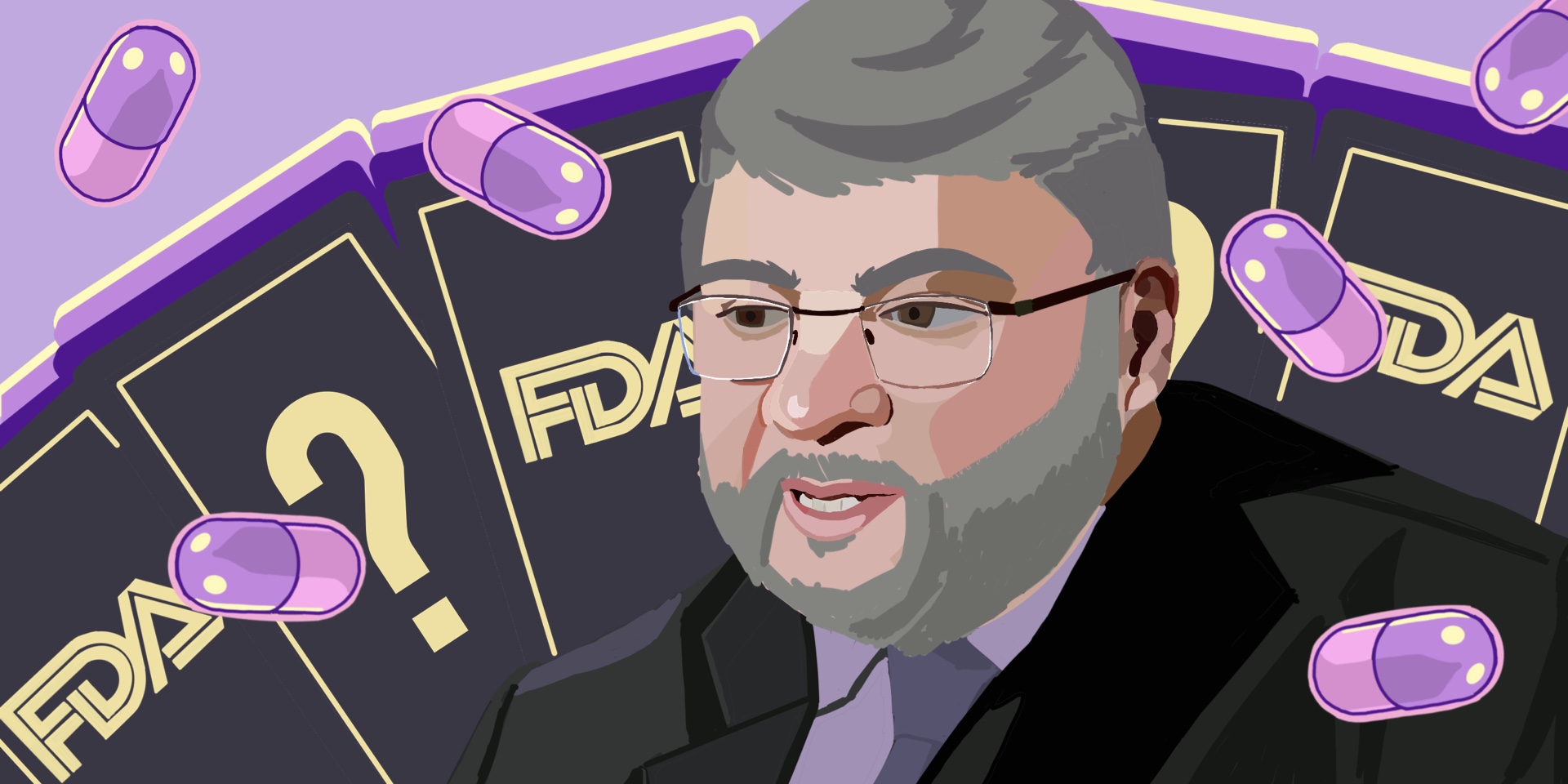
Illustration: Assistant editor Kathy Wong for Endpoints News
Click on the image to see the full-sized version
The Big Pharma is tapping into a behemoth in the royalties market, as Legorreta's 26-year-old firm claims to have more than 45 drugs in its portfolio. They tout blockbuster status for 14 of those.
Royalty's ambitions include dishing out $10 billion to $12 billion in the next five years for late-stage or approved products.
This is not the first time Royalty has linked up around a Merck-involved asset. AiCuris sold partial royalty interest for Prevymis, an approved prevention for cytomegalovirus infection, for $220 million in 2020. There's also diabetes med Januvia, rotavirus vaccine RotaTeq, and the rheumatoid arthritis and ulcerative colitis med Remicade.


Comments
Post a Comment